Don't make me call it Shocktober: vol. IV
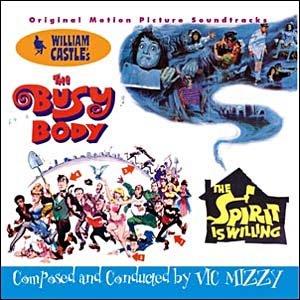
Ben and Kate Powell, along with their son Steve, rent a lovely summer house in New England. Unfortunately, there's the small matter of the love triangle of ghosts haunting the place. Imagine "The Canterville Ghost" re-written as a "Three's Company" episode and you're pretty close. I don't know if Ben Starr (adapting a Nathaniel Benchley story) knew or cared that he was writing for Sid Caesar, but the legendary funnyman doesn't get to do or say anything funny, a problem that spreads to the rest of the talented cast (among them, John Astin, Jesse White and Harvey Lembeck). However, Mary Wickes and especially John McGiver have some good moments. Not an unwatchable film, but there's probably a reason it's never been released on video or DVD.
As with The Night Walker, Vic Mizzy delivered a score far better than the William Castle misfire deserved. Mizzy's "Main Title" is a pleasant sea shanty (with lyrics performed by the composer; available in the film, but not on CD). Harpsichord takes the lead, accompanied by swaying trumpets and a killer player piano solo at 1:27.
As with any Mizzy score, the composer's music reflects the fun he must've had writing it, like in "Bedroom Cares", a circusy cue that throws in everything from harpsichord, playful winds and booming horns to the "Wedding March", showing how the ghosts came to be.
Another theme is introduced, ostensibly for the Powells, in "Peculiar Place"; a bouncy tune passed from bassoons to xylophones to flutes to an organ. "Steve Meets Felicity" concludes with a delightfully slow version of the theme.
For the supposedly 'hilarious' scenes of the ghostly appearances, Mizzy brings in a melody from "Bedroom Cares" and sets it to work on horns, winds, harpsichord and even bells in cues like "Ghost to Ghost" and "Where's She Hiding". Other highlights include the appropriately-named "Swingin' Jenny" and the delightfully sleazy "Fill 'er Up".
"Priscilla's Seance" is just indescribable. It starts innocuously enough with a fluttering flute solo...then an electric guitar butts in. The flute responds, but the guitar shoots back, dominating the cue and shutting the flute out. It's not long before one realizes that, yes, this is supposed to be a musical conversation between two instruments and it's truly hilarious.
Still, even though this is a comedy (or so I'm told), Mizzy does work in moments of suspense ("Tall Tale"), horror ("Kate's Turn") and even melancholy ("Suspected Steve", "The Disappearance", "Lost").
According to Percepto Records, the album (which also features Mizzy's fine score to 1967's other Castle/Caesar joint, The Busy Body) is out of print. Thankfully, reports of this were greatly exaggerated and the CD can be bought for a song (while supplies last) from Screen Archives Entertainment). Audio clips of every track can be found here. Seriously, what are you waiting for?
posted by lonestarr357 @ 11:24 AM
0 Comments


